Eyeball 3D Papercraft: A Designer’s Review for Halloween Projects
As a graphic designer, I am constantly asked to balance whimsy with professionalism, especially when working on seasonal campaigns. Recently, a client approached me with a unique request: they wanted to launch a limited-edition line of spooky-themed merchandise for a boutique handmade brand. The goal was not just to create digital graphics, but to produce tangible, interactive experiences that would stand out in a crowded creative marketplace. This is where the Eyeball 3D Papercraft asset caught my attention. It is not merely a clipart image; it is a structural design element that demands consideration in both digital and physical realms.
First Impressions and Visual Mood
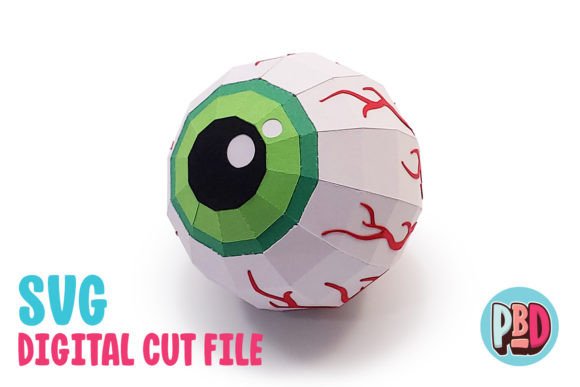
When you first inspect the Eyeball 3D Papercraft, the immediate takeaway is its three-dimensional potential. Unlike flat vector illustrations, this Shapes category asset relies on geometric precision to create depth. The visual mood is undeniably eerie yet playful. It strikes a delicate balance between "creepy" and "cute," making it suitable for a wide range of audiences, from children’s party invitations to edgy adult-themed decor. The design feels tactile. Even in its digital preview, you can sense the weight of the cardstock required to bring it to life. For a brand identity looking to inject personality without resorting to cliché horror tropes, this asset offers a sophisticated alternative.
Real-World Application in Client Projects
In our recent project, we explored how this Eyeball 3D Papercraft could serve as a hero graphic for various touchpoints. Here is how it performed across different mediums:
- Packaging Design: The asset worked exceptionally well as a die-cut window or a layered embellishment on product boxes. By using medium to heavy cardstock, the papercraft structure adds a premium feel that elevates the perceived value of the item inside. It transforms standard packaging into an unboxing experience.
- Social Media Graphics: For Instagram posts and Pinterest pins, we used high-resolution renders of the assembled model. The shadows and angles created by the 3D structure provided natural contrast against solid-colored backgrounds, stopping the scroll effectively. It served as a powerful marketing visuals tool for launching the new collection.
- Print-on-Demand Merchandise: We tested the asset for t-shirt designs and tote bags. While the full 3D structure cannot be printed directly onto fabric, the underlying SVG paths allowed us to create stylized, flat-vector versions of the eyeball. These retained the geometric charm while being practical for sublimation design and screen printing.
- Digital Invitations: For a virtual event series, we incorporated animated versions of the papercraft. The subtle rotation and shadow shifts added a dynamic layer to the web design elements, keeping users engaged longer than static images would have.
Where the Asset Shines
The Eyeball 3D Papercraft finds its strongest use cases in areas where visual hierarchy allows for decorative focal points. It excels in large layout areas, such as website headers or poster centers. When placed on a dark background, the white or light-colored cardstock simulation pops beautifully, creating a strong visual hierarchy. It is also ideal for printable wall art, where customers can assemble the model themselves, adding an interactive element to their home decor. Furthermore, it serves as a perfect accent for sticker design sheets, where the intricate cut lines add detail without overwhelming the small format.
Areas Requiring Caution
However, not every design situation calls for this level of complexity. Designers must exercise caution when integrating this asset into crowded layouts or complex backgrounds. The detailed cut lines can become muddy if scaled down too far, leading to a loss of clarity. In minimalist branding projects, the ornate nature of the papercraft might clash with clean, sans-serif typography. Additionally, in low-contrast designs, the depth cues may be lost, reducing the impact of the 3D effect. It is crucial to avoid placing this asset over busy patterns or photographic textures unless significant separation techniques are used.
Technical Considerations for Professional Use
Before committing to the Eyeball 3D Papercraft for a commercial project, several technical checks are necessary. First, always test the asset in black and white. This ensures that the form holds up without relying on color gradients alone. Next, check the contrast on both light and dark backgrounds to guarantee visibility. If you are using the SVG version, inspect the vector editability. Can you easily adjust the stroke weights? Are the layers grouped logically for easy manipulation?
For those planning to print the model, verify the file formats and recommended paper weights. The description suggests medium to heavy cardstock, which is accurate for maintaining structural integrity. If using PNG files, inspect the transparency edges for jagged artifacts that could detract from a polished look. Finally, confirm the commercial license. Ensure you have the right to use the design assets for your client’s products, whether they are physical goods or digital downloads. Misunderstanding licensing can lead to serious legal issues, so due diligence is non-negotiable.
Typography and Pairing
Pairing the Eyeball 3D Papercraft with the right typeface is essential for maintaining brand consistency. The geometric, slightly unsettling nature of the eyeball pairs well with display fonts that have a vintage or horror-inspired aesthetic. However, for a more modern approach, consider contrasting it with a clean sans serif font to ground the design. Avoid pairing it with overly ornate script fonts, as this can create visual clutter. Handwritten fonts can work if they mimic the handcrafted nature of the papercraft, but they must remain legible. The key is to let the 3D model be the star while the typography supports the message.
Final Verdict
The Eyeball 3D Papercraft is a versatile and high-quality design asset that brings a unique dimension to creative projects. Its ability to bridge the gap between digital graphics and physical crafts makes it invaluable for small business branding and handmade businesses. Whether you are designing a Cricut project, creating a Canva template, or developing a comprehensive design bundle, this asset offers flexibility and charm. It requires thoughtful integration and technical verification, but when executed correctly, it delivers a memorable visual experience that resonates with audiences. For designers seeking to add a touch of spooky sophistication to their portfolio, this SVG design is a worthy addition.